Showing posts with label York. Show all posts

Thursday, 6 November 2014

Reminiscing.....

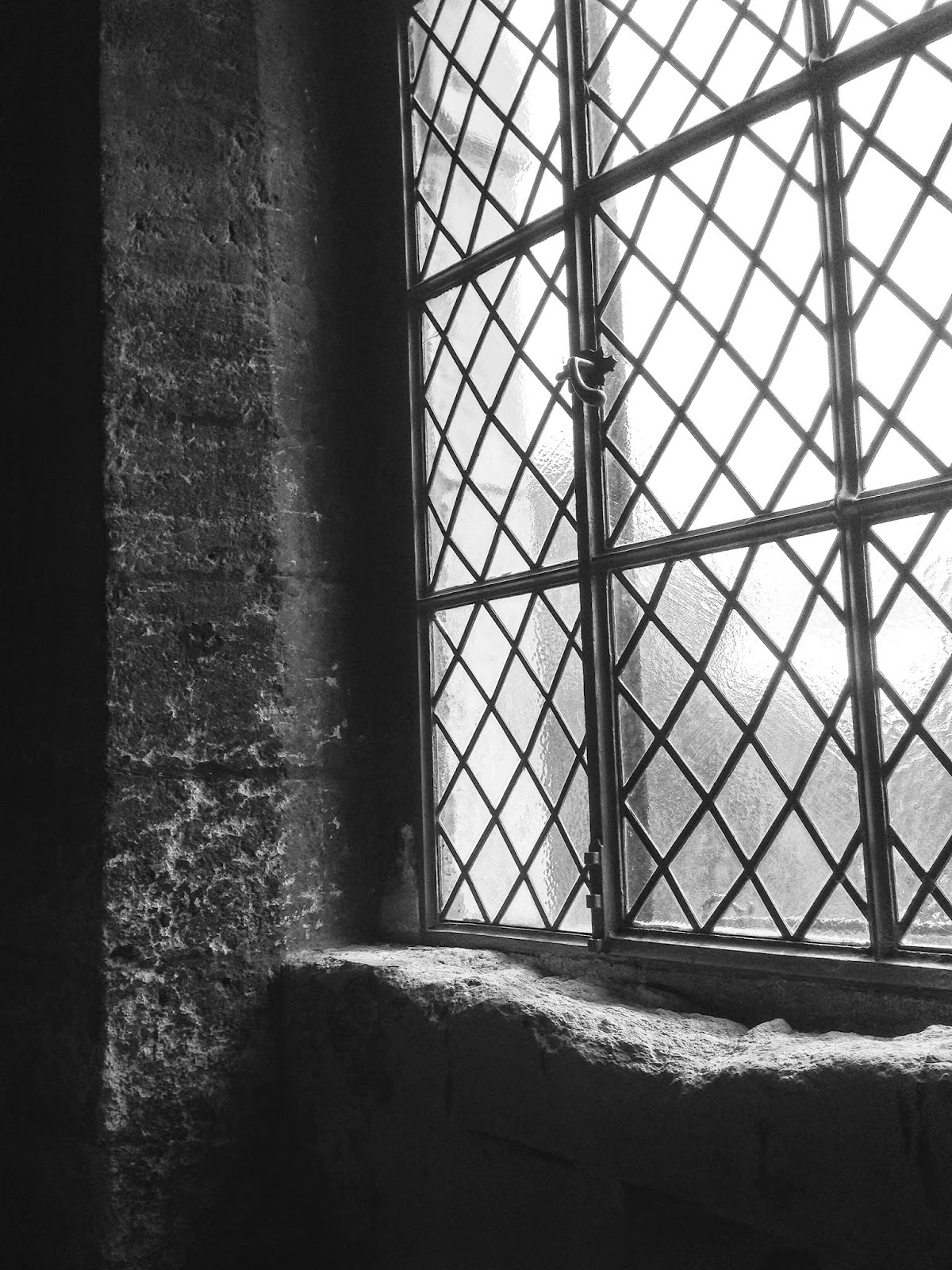
Inside the Tower of London
So this last week, I have been reading, amongst other things Markham’s Richard III: His Life & Character. It got my wheels turning, as to some of his major points he draws on in his chapters about the princes and what became of them have also been questioned by myself. He also brings up a very interesting point about the authorship of the many articles that were written about the incident, as well as many others; including the Croyland Chronicles of London through out his argument. What went on in those author's heads?

He tried not to let the wax from the candle above the ledge of the writing desk drip to the parchment as he hurried the last few sentences of the following day’s news. Out of the corner of his eye watching the wax drip… and drip. People were talking, talking about many things, and the word needed to get out; Edward IV’s sons were missing. More than likely dead. He hadn’t heard the word murdered yet from anyone’s lips, but definitely missing. 

His hands shook as he blew the drying sand off the parchment to help make the ink set and dry faster. King Richard was still in York. He knew that much, but still there were many unanswered questions. He had to have known the fate of the children, how could he not.

Nervously, he read over his work, blew out his light and gave it to the grandmaster.
“I am done with tomorrow’s bit.” He nodded and said, as he backed away from the elder monk, waiting for criticism or acknowledgement. He never knew which would come first if any.
“The words, stories, are every where. Where is the King? He has to know?” He said again.

“Let's hope we know the truth soon, once he returns. Perhaps this is a misunderstanding, or one of the Lancaster’s plays of folly.” The grandmaster said as he glanced over the article the novice monk gave him. He hoped he didn't have to publish this... or more like wish it wasn't so.....

Folly, or misunderstanding, many of the accounts that were written whether they were against Richard’s reign or not, many baseless and not backed up by solid evidence as noted in Markham’s book. Personal prejudices at times, got in the way and aided the rumors. Will we ever know what happened? We might not but we can for sure develop a better understanding of the writers who wrote the articles and their basis for doing so.  Markham's book is perhaps one of my favorite sources of the life and time's of Richard III and the world he lived in.

Saturday, 4 October 2014

My Trip to York Minister


Even at sunset its massive walls captured my breath, as I stood outside. Its grandeur was captivating. 

It wasn’t till the following day I ventured back to its massive presence, York Minster (Cathedral). After seeing it the night before with my cousin, I now know why so many speak so highly of it. The outside alone was just amazing beyond words.  Standing out front of the doors just made the hair on the back of my neck tingle with a familiarity I cannot describe.
A bit of history, York Minster is one of Northern Europe’s largest Cathedrals. Its presence has been noted since the time of Bede. Its beginnings began as a wooden church in 627 as a place of baptism for Edwin King of Northumbria, that year.  In 637, it was converted to a stone structure under Oswald of Northumbria and dedicated to St. Peter. Later in the 8th century and school and a library were attached to the structure. Various ups and down of the church happened afterwards, burned by the Danes, fires, the church was rebuilt a number of times. In 1215, Walter de Grey was made archbishop and ordered the church to be rebuilt to the likeness of Canterbury. In 1220 building began and in 1420 the building was considered finished and consecrated.

Now, on to my little tour.  Of course, I had to pay a bit to go in. Student discount YAY! One thing I learned on this trip was to never leave home without that ID, I probably saved around 100 British Sterling total. Overall, I was more than happy to pay the small sum of sterling they asked and made a small donation, especially since it went to the buildings upkeep. How did they maintain York Minister?  I asked a nice friendly church volunteer and got a very well informed answer. Well, it was being worked on while I was there. One of the facades to the west I believe was draped in a green cover and intricate scaffolding.  Stonemasons are rare these days I was told, so when the church gets wind of some in the area, work or maintenance is the first order of business to be done on the old stonework of the building.

Then it was time to explore the inside. By just walking in to the doors; I cannot tell you all, how massive the sight was and how it captivated my tired eyes and head. The organ was being warmed up for later in the day (At times, I believe the organ was made for angels.), visitors were meandering around at their own pace, and I saw a tour here and there. It was quite peaceful actually.  Various stain-glassed windows were filtering the sun below making it splatter on to the floor, illuminating various corners and isles of the minister. One could get lost in there for sure just taking all the sights and sounds in. Like any student or historian, I went straight to the catacombs and exhibits that I found and learned what I could in the short amount of time I had.  I had to run and catch the train in a matter of a few hours. 

Burial of Prince William of Hatfield, Infant son of Edward III
The catacombs were underneath the main priory screen in the center of the minister. It was dark, and had that musty old castle smell, but very impressive. They had a few exhibits and you could see and the old stones of the original cathedral were left over, as columns before they were moved the building outwards and larger. There was some pretty gorgeous wooden furniture, specifically a trunk.
I went back up stairs and out, and wandered around to see who had funeral vaults, saw some I knew and some I was not so familiar with. All quite impressive.

My gaze then shifted upwards. It was a sight I probably will never forget. The latticework and intricate design and stonework of the celling were astounding. 
Overall York Minister did far more than impress. It blew my mind away. I know now why Richard III had his son instilled Prince of Wales in its massive and captivating walls. It was built for a prince, and for a king.  A well-loved king of the north.


A little video I made of the inside:)


Wednesday, 22 January 2014

What was Buckingham thinking? Crown Snatching 101

When looking at why King Richard III had such a turbulent two year reign; keeping the peace in the land wasn't exactly a walk in the park. One of the most pivotal rebellions during his reign was Buckingham’s Rebellion in the fall of 1483. Oh Henry Stafford, pulled a Lord Stanley but two years earlier. The rebellion was not just one incident but a series of events, that even included an attempt on Richards life. The rebellion, ultimately failed, and heads were lost. More damaging to Richard’s psyche was that this was a man whom he trusted, and was at one point of time in the inner circle of loyal supporters of his brother Edward IV. More than likely this installed a sense of distrust in Richard and the men whom he most trusted as well.

The intent behind the conspiracy was to depose Richard III and restore Edward V, Edward IV's son to the throne. In the midst's of events, word got out that the princes were gone from the tower. Interestingly, it was Buckingham who proposed getting Henry Tudor to come out of exile and claim the throne and to marry Elizabeth of York. Part of his plan was to have Henry invade England via Wales.  Henry Tudor didn't make it to the shores of England this time. Weather made him turn back and return to Brittany. Buckingham’s Welsh forces were defeated by Richard. Buckingham fled and attempted to seek sanctuary and arrange passage to Brittany. He was caught on a bounty put out by the King and tried for treason. He was beheaded on November 2, 1483 in Salisbury. Richards most trusted and also well treated right hand man, obviously had proven himself untrustworthy. How many people left at court could he trust? “Trust no one” hops into my mind, it probably did in Richards too.
King Richard III (Aneurin Barnard) "The White Queen"

The more and more I delve into these last two years and the ones leading up to Richard’s death, the more the whole ordeal seems to be like one big sub plot going on behind the scenes. Richard is the puppet, and his men in court are pulling his strings, and orchestrating events to make him look as bad as they can, and crown snatching becoming their main objective, making their move into power, as seamless as possible. This theory is quiet evident when one looks at the information that scholars have discovered about the disappearance of the princes.

Noted, it is scholarly hypothesized that Buckingham was a prime suspect in the disappearances of the princes.  It is theorized that he too was trying to make claim to the throne that Richard was sitting on. Debating that he too had similar legitimate ancestry of the Beaufort line, and a claim to the throne which was yet stronger than Henry Tudors. This now adds a third person to the “Game of Thrones,”  but in 1483 style. The move (Act of disappearing princes.) was thought by some, as a way to blame and dispose Richard and then Buckingham and Henry would be left as rivals. This of course did not come to light, as Buckingham was caught and executed. 

Also interestingly, in 1980 a manuscript was discovered in the College of Arms, that cites the princes were murdered "be the vise" of the Duke of Buckingham. But there is some argument over whether "vise" means "advice" or "devise," and, if the former, in what sense. (http://www.cyberancestors.com/cummins/ps56/ps56_160.htm) This claim alone makes it look like Richard was set up. Taking into consideration as well, the timing that all of this happened, it was right after Richard claimed the crown, and right before the rebellion took place. Was this in fact a warning to Richard that there were others that had been closer to Edward IV, and in his inner circle, that wanted the throne perhaps more than Richard? Time can only tell, and unfortunately for Richard, it did.

Sunday, 12 January 2014

King of the North: Richard III and the city of York

“welbyloued of my neyghbours, true to my frendes, obeysaunt & devoute in thynges religious…” from The Declamation of Noblesse

After Edward IV became king, he gave his brother Richard, Duke of Gloucester lands in the north of England to govern, including the borderlands of Scotland and some of the most prominent cities in the north of England.  Richard had been in control of the north since 1461 under his brother Edward IV.  His relationship with the north had already been growing.  Soon after he wed Anne Neville, he was granted more lands, and the forfeited lands of Warwick.  Richard was then dubbed, “Warden of the West Marches of Scotland.”  During the summer of 1482, Richard invaded Scotland at King Edward's command to control unrest from the relations and political upheaval coming out of France.  Richard’s relationship with the north of England was not always one of championing for his brother the king, but one of good relations with its cities.  One such city, York, was not only was a city that he had close relations with, but it was also a city that greatly loved and supported him. By looking at this relationship between king and city; we can gather quite a different picture of what Richard was really like, definitely not one of tyrannical sorts. 
 
Battle of Bartlet c.Geoffery Wheeler
York was a great city that deeply honored and held Richard in highest esteem. They looked to him in economic hardship for help and in returned granted him the warmth and welcome befitting to a great king.  This is seen in by the many gifts of generosity to his family.  Because Richard had spent much of his youth in Northern England, Yorkshire and Middleham Castle, he was very close and had close patronage in the north. It was here he made generous donations and contributions to the church, held great parties displaying gifts to its citizens and gifts to him as well. In showing such support on the day of his coronation, the mayor and Alderman traveled to Middleham Castle to bring his son, Edward gifts of wine and food. (Source: History of York; http://www.historyofyork.org.uk/themes/medieval/king-richard-iii-and-york)

Besides growing up in the area at Middleham Castle, his visits to York seemingly few were actually of note of the times. We know that once he was king, he visited York a few times, one time for three weeks in 1483.  (One source noted that Richard was actually in York, when the famous princes in the Tower went missing or ill befell them.) Noted in the city chronicles, he was presented with gifts, and it was this trip that his son was crowned Prince of Wales, at the Minister in York. This was more than likely followed by great and elaborate festivities in the city.  Richard also had the bodies of his father, Richard of York and brother Edmund in 1476, moved to the church in Fotheringhay his birthplace, to the church for reburial. The reburial celebration not only did it bring jobs to the area by requiring masons to build of the additional tombs, but it brought great festivities honoring his father and brother.  The simple act of moving his dearly departed family back to rest in the north, not only shows closeness and ties to a land of his upbringing but it exhibits much love and admiration.


Being a very pious and openly religious man; he made many generous contributions to the church in the area, not just the placing of his family in Fotheringhay church.  It is speculated that he had planned to be buried at York Minister. A debate that has been quite a hot topic of late, adding that he had planned to have a large chapel built in his honor as well, to pray for his soul, once he passed on.  Whether his intentions were written down, this I am unsure of, his generosity and work to place various colleges in the area, and gifts could have been a result of his last intentions.  One of the biggest and surviving contributions Richard made to the north was the college he had in stalled in Middleham in 1478.

The relationship Richard had with his tidings in the north and the city of York, were quite evident and on good terms through out his reign. The city archives note with great sadness, emotion, and heartbreak with the outcome of the battle of Bosworth where their beloved Richard had fallen:


“Were assembled in the counsail chambre where and when it was shewed by diverse persons and especially by John Sponer send unto the feld of Redemore to bring tidinges frome the same to the citie, that King Richard late mercifully reigning upon us was thrugh grete treason of the ducof Northfolk and many othere that turned ayenst hyme, with many othre lordes and nobilles of this north parties, was pitiously siane and murdred to the grete hevynesse of this citie, the names of whome foloweth hereafter.”


23rd August 1485
York City Archives. House Book B2—4f. 169v.


The city of York was set to send 80 men to aid Richard in his battle but they came to late.  Blame over time has been placed on Henry Percy.  Owner of a manor, Percy as battle commander at Bosworth in 1485, failed to join the battle at command of the king aiding the betrayal of Stanley and defeat of Richard. It is even noted that Henry VII was fearful of his visit to York after Richard’s death, as the city was still quite loyal to their slain king and he feared for his life.  Under Henry VII rule, word was supposed to be dispatched by Percy and delivered to York that the king was raising taxes to fund a war in France. The kings response to his plea of the citizens complaint was to have the taxes stay, resulting in his return to town, a ransacked manor house, and his murder.  Obviously, a man who had been known to betray their beloved Richard, York’s “King of the North,” met his demise eventually.

King Richard III, was a man who was seen as a “perfect prince” to the city of York and the north. For the relationship he had with the city of York, was one of great loyalty brought together with justice from the laws he created, the harmony of his relationship with the city, and the church in the area.  His outgoing and well known display of public morality and loyalty had a huge impact on his reputation. It painted a perfect image of what and how a prince should be, one that was admired in the north. It’s this relationship that York to this day still holds dear.  
"loyalté me lie" ~motto of King Richard III


Sources:
http://www.livescience.com/38935-king-richard-iii-facts.htm
http://richardiii-ipup.org.uk/resources
http://www.richardiii.net/2_1_0_richardiii.php#interests